

- Description
- Lesson Schedule
- Class Intro Video
- A Biblical Worldview
- The Lemons-Aid Way
- Teacher Bios
- Outschool
- Request a Section
- Reviews (0)
- Philosophy of Teaching: English Language Arts
Description
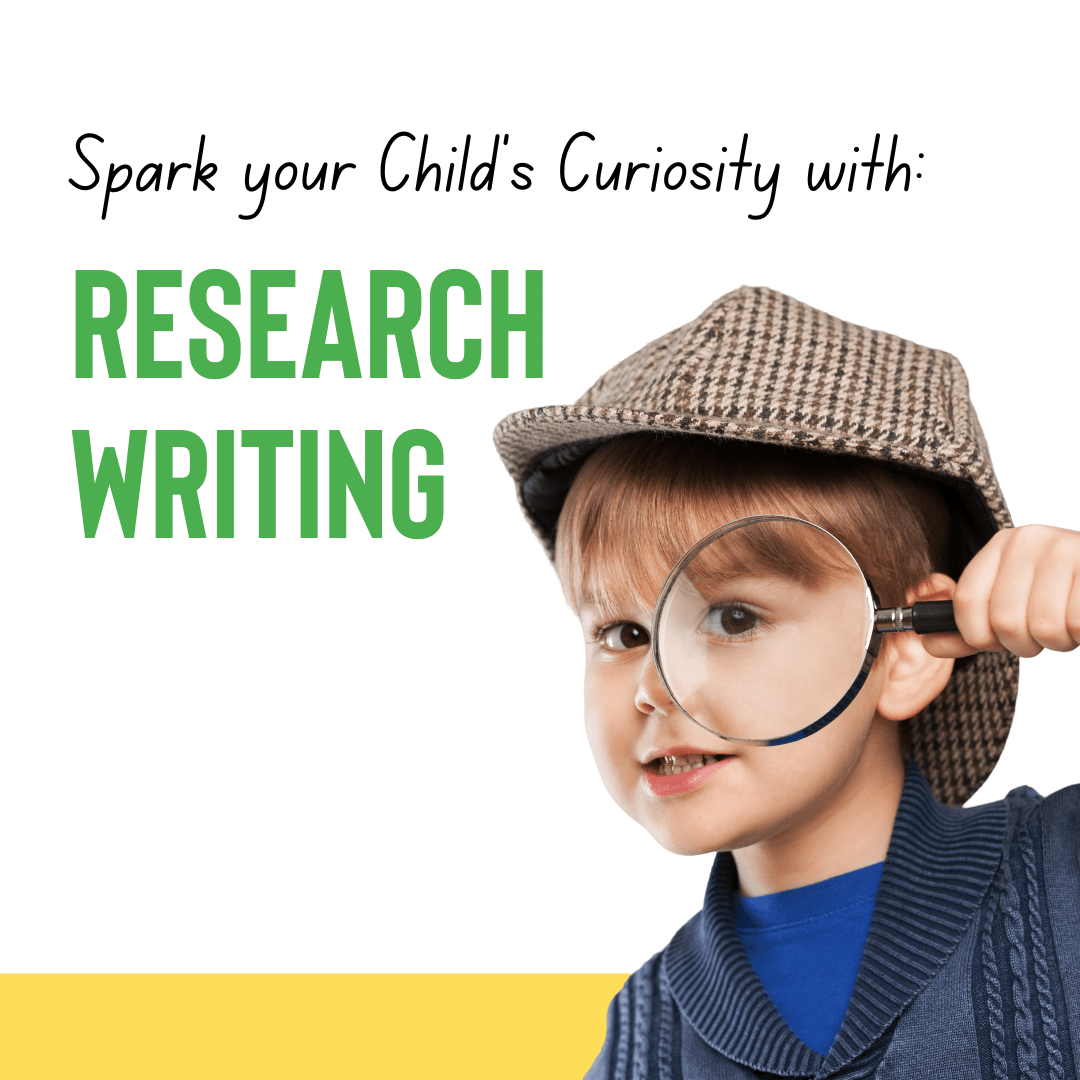
Research is one of the oldest human callings. To ask a question, to find sources, to read with care, to take honest notes, and to weave what one has learned into one’s own words is work that scientists, scholars, theologians, and biographers have done for centuries. The final, and most difficult, step is to synthesize it all together into an organized 5-paragraph essay. We will offer modeling and guidance in this class, and you will be amazed at what your child will produce.
How that work gets done, step by step, with high-interest topics and explicit support, is what this camp teaches.
Proverbs 25:2, our course verse, says, “It is the glory of God to conceal things, but the glory of kings is to search things out.” God hides truth in His world, in His Word, and in every good book ever written, for us to find. A fourth or fifth grader who learns to research is doing what every image-bearer was made to do, searching out the wonders God has placed in front of her, and reporting back honestly what she has found.
𝐖𝐡𝐚𝐭 𝐘𝐨𝐮𝐫 𝐒𝐭𝐮𝐝𝐞𝐧𝐭 𝐖𝐢𝐥𝐥 𝐋𝐞𝐚𝐫𝐧:
✅ How to choose a high-interest topic, organize the work, and ask good research questions
✅ Smart searching online, including how to find kid-friendly and trustworthy sources
✅ Reading informational texts, annotating them, and taking notes that avoid plagiarism
✅ Paraphrasing, the discipline of putting another author’s ideas into honest words of one’s own
✅ Elaboration techniques, the special emphasis of this camp, that turn a basic paraphrase into a rich, developed paragraph
✅ The five-paragraph essay: an introduction with a hook and a thesis, three body paragraphs, a conclusion that lingers, and a separate bibliography page
𝐖𝐡𝐚𝐭 𝐒𝐞𝐭𝐬 𝐓𝐡𝐢𝐬 𝐂𝐚𝐦𝐩 𝐀𝐩𝐚𝐫𝐭:
💎 Four intensive sessions, each one a complete teaching block of explicit instruction, teacher modeling, guided practice, and independent writing.
💎 The teacher supplies one of the three required articles for each student, removing some of the source-finding burden and giving every camper a guaranteed kid-friendly starting point.
💎 Out-of-class editing and feedback from the teacher are included in the price of the camp. Each student receives personal feedback on their final essay before turning it in.
𝐏𝐞𝐫𝐟𝐞𝐜𝐭 𝐅𝐨𝐫:
– Fourth and fifth graders ready to write their first real research paper
– Students who love learning about a high-interest topic and want to explore it deeply
– Christian families who want research instruction grounded in a biblical worldview
– Reluctant writers who do better with step-by-step instruction and explicit support
Lesson Schedule
Class Schedule:
Day 1: Students learn the steps of research, how to be organized, choose a topic, and how to search smart to find resources. For homework, they find their resources and read them. They are guided to find kid-friendly resources, and the teacher gives them one of their three articles.
Day 2: Students learn how to read their articles, annotate them, and then take notes in a way to avoid plagiarism. Finally, they learn how to paraphrase a nonfiction article. For homework, they write a paraphrase of each of their three articles.
Day 3: Students learn how to take their paraphrases and turn them into body paragraphs. On this day, they learn different elaboration techniques to expand on what they have already written. They also learn to use Google Docs; however, they do not need a Google account. The teacher will provide them with a link for them to use. For homework, they revise their body paragraphs with the elaboration techniques they learned. Day 4: Students learn how to write the introduction and conclusion, and they do it in class with teacher guidance and support. They learn how to hook their reader, how to write a thesis statement, and how to bridge the gap between the hook and thesis. In the conclusion, they learn to restate their thesis and each of their main ideas, but in a unique way. Then they leave their reader thinking with final words. Last, they learn to create a separate bibliography page and how to revise and edit their entire essay. For homework, they fine-tune their essay and turn it in for final teacher feedback.
Class Introduction Video
Coming soon…
Taught From a Christian Perspective
Our mission is to equip learners’ minds and shepherd their hearts. We want them to have saving faith in our Lord Jesus Christ and then develop a biblical worldview. This means they view their world, themselves, and God in a way that aligns with what the Bible teaches. This brings great peace and understanding to the believer because we serve a good, sovereign God. This course is taught with these goals in mind. In class, we may pray, read scripture, and discuss how to view the content from a Christian perspective.
We have adopted The Master’s Seminary Doctrinal Statement.
ENGLISH:
The most essential reason people must become competent readers is to read the word of God. This is how God communicates with His people, and literacy is critical for developing a biblical worldview. Competent readers can engage in the Word of God and other texts with much thinking and reflection. Readers should be able to decode, understand, remember, analyze, synthesize, evaluate, make inferences, make connections, and apply learning from reading to other subject areas and the rest of life. Readers grow in knowledge and wisdom and can let the Word of God renew their minds and transform their hearts, becoming thinkers who can engage the world for Christ.
When writing, we are turning ideas into words that communicate. Written communication should be functional, truthful, orderly, coherent, creative, and beautiful, all traits present in God’s written words in the Bible, which we want to emulate.
Communication skills are essential for believers. The communication skills taught in English will help learners communicate with others and to be confident public speakers. These skills are essential when sharing the gospel message. Our voices are tools that help us show Jesus to others as we witness to the world through what we say–and what we don’t say (see Colossians 4:6, James 1:19-20, Ephesians 4:29, and Proverbs 10:19). We serve a creative God who has given us all kinds of tools to help communicate His message.
The Lemons-Aid Way
Graphic Organizers
Students need graphic organizers to help them see the structure and breakdown of a concept or process. For example, we use them to help learners understand how to write a paragraph or essay and to use the writing process. This is how they learn to develop coherent ideas. They don’t figure out how to do this magically; the graphic organizers and the intentional, explicit teaching help them learn the skills!
Workshop Time: Student Motivation & Accountability
We use “workshop time” so students will work while the teacher answers questions, gets them started, and holds them accountable. In a writing class, the teacher “visits” learners on their Google Documents and watches and helps them write. The immediacy of the feedback/revision cycle with the instructor allows writers to improve rapidly. Additionally, once we started using this method in writing classes, we saw nearly a 100% completion rate in student essays!
Teacher Feedback
The back-and-forth work between a student and teacher significantly benefits a student if done well. We follow best practices in designing class time, assignments, and routines. According to Pennington Publishing, effective writing feedback (or grading) is:
- Specific, not general
- Immediate, not postponed
- Routine with a revision / feedback cycle
- Explanatory
- The right amount
- Targeted to the most critical issues
- Varied (written, audio, and video comments)
- Holding students accountable
Explicit Teaching
Explicit teaching is a method of instruction students desperately need! It is the opposite of a constructivist philosophy whereby students try to construct meaning themselves.
What a waste of valuable learning time.
Instead of leaving students to magically figure out how to write an essay or read or do a geometry proof, we teach explicitly, which is backed by a large body of evidence, and it’s how Mrs. Lemons teaches her undergraduate and graduate teacher candidates in college to teach! We do it this way because it’s how kids learn.
Explicit instruction is “a structured, systematic, and effective methodology for teaching academic skills. It is called explicit because it is an unambiguous and direct approach to teaching that includes both instructional design and delivery procedures. Explicit instruction is characterized by a series of supports or scaffolds, whereby students are guided through the learning process with clear statements about the purpose and rationale for learning the new skill, clear explanations and demonstrations of the instructional target, and supported practice with feedback until independent mastery has been achieved.”
-Explicit Instruction: Effective and Efficient Teaching by Anita L. Archer and Charles A. Hughes.
Anita Archer trained Mrs. Lemons in workshops, and it changed her teaching. Read a little more about the research behind explicit teaching here and here.
To read more about your teaching and learning methods, read Mrs. Lemons’ blog.
The Lemons-Aid Team
Lemons-Aid teachers have a few things in common.
❤️ They love their students and value each of their unique strengths and personalities that make our classes special. Our classes can be described as fun, personal, academic, challenging, and supportive.
🤩 We work to keep learners engaged, so there is always a degree of student accountability for their attention and focus, whether that be through asking them direct questions or by using the chatbox.
💭 We know all kids can learn, but sometimes things are hard! To support students, we teach them how to develop effective thinking and learning habits that will bring them success in class and in life.
🌟 Building relationships with students so they know we care about them helps us balance the high expectations we have for them regarding their effort, work quality, and behavior. Our students are encouraged, cared for, and they achieve!
𝙆𝘼𝙍𝙀𝙉 𝙇𝙀𝙈𝙊𝙉𝙎: English Language Arts
#High-Energy #Skilled #Experienced #Relational #Fun #Faithful
Karen is the Founder of Lemons-Aid. She has a bachelor’s degree in English, a minor in Education, and a master’s degree in Education Administration from Liberty University. With a teaching certificate and a principal’s license in both Washington and Colorado, she has many years of experience teaching English Language Arts and History / Social Studies at the middle school and high school levels. Additionally, she is TESOL and TEFL certified and enjoys teaching English Language Learners from all over the world. She has worked in private and public schools at every level and is currently an affiliate faculty member at Colorado Christian University, supervising teacher candidates in their undergraduate and graduate teacher education programs. She is a teacher of teachers. A homeschool mom herself, she admits that teaching other people’s kids is easier than teaching her own teenage boys! She lives in the Denver, Colorado area where she cheers on the Broncos, Avs, and the Rockies, but her favorite athletes are her own kids who play hockey and baseball!
𝑱𝑬𝑵𝑵 𝑹𝑰𝑨𝑳𝑬: English Language Arts
#Experienced #Knowledgeable #Empowering #Patient #Rises Above the Ordinary.
As a certified English teacher, Jenn has taught in some capacity over the course of the past twenty-five years. She has taught middle school and high school English classes in both private and public school settings, tutored international ESL students online, developed and taught literature and public speaking classes for a local homeschool co-op, and homeschooled her own two children. Jenn has a bachelor’s degree in English Education. A strong believer in lifelong learning, Jenn has also taken several graduate-level courses related to teaching. Jenn enjoys spending time with her husband, Mark, and their two teenagers. She enjoys taking day trips close to where they live in upstate New York. In her spare time, Jenn enjoys singing and performing in plays. Additionally, she enjoys curling up on the sofa to read a good book. More than likely, one of her four cats will be curled up at her feet.
Christian Teachers on Outschool
Lemons-Aid Coupon Code:We want to serve you on Lemons-Aid! For first-time learners on Lemons-Aid, you can use the coupon code Newbie20 to get $20 off your first class.Outschool Coupon Code:If the schedule on this platform doesn’t work for you, we will happily teach you on Outschool, but we can’t talk about Jesus. Use this referral code and get $20 off your first class on Outschool: LEMONSA2020Visit Lemons-Aid Learning on
Request a New Section
Want to see this class offered at another time? Send a request, and we’ll see what we can do!
ENGLISH:
The most essential reason people must become competent readers is to read the word of God. This is how God communicates with His people, and literacy is critical for developing a biblical worldview. Competent readers can engage in the Word of God and other texts with much thinking and reflection. Readers should be able to decode, understand, remember, analyze, synthesize, evaluate, make inferences, make connections, and apply learning from reading to other subject areas and the rest of life. Readers grow in knowledge and wisdom and can let the Word of God renew their minds and transform their hearts, becoming thinkers who can engage the world for Christ.
When writing, we are turning ideas into words that communicate. Written communication should be functional, truthful, orderly, coherent, creative, and beautiful, all traits present in God’s written words in the Bible, which we want to emulate.
Communication skills are essential for believers. The communication skills taught in English will help learners communicate with others and to be confident public speakers. These skills are essential when sharing the gospel message. Our voices are tools that help us show Jesus to others as we witness to the world through what we say–and what we don’t say (see Colossians 4:6, James 1:19-20, Ephesians 4:29, and Proverbs 10:19). We serve a creative God who has given us all kinds of tools to help communicate His message.
LITERATURE:
Stories often serve as powerful vehicles for truth. For example, the prophet Nathan used a parable to reveal King David’s sin in 1 Samuel 12:1-4. Similarly, Jesus frequently used parables to teach profound spiritual lessons. Literature clearly offers timeless insights that reflect the complexities of life, guiding us toward His wisdom and understanding.
All truth is God’s truth. Even unbelievers use universal themes in their writing that clearly point to deeper truths about life and the human condition. For example, authors often use theme concepts related to justice, love, or integrity. These concepts reveal a glimpse of God’s truth– whether the author acknowledges it or not–because all truth originates from God (John 17:17).
Throughout English and literature courses, learners will read about individuals who made flawed decisions. As Romans 3:23 reminds us, “For all have sinned and fall short of the glory of God.” Literature provides a window into humanity’s fallen nature, allowing students to learn from the mistakes and successes of characters. By engaging with literature, students will gain timeless insights into the complexities of life, as reflected in Proverbs 2:6: “For the Lord gives wisdom; from His mouth come knowledge and understanding.”
Reviews
There are no reviews yet.