

Course Details:
- 1 live class per week
- Subscription continues until paused or cancelled
- Live Class Length: 45 minutes
- 16 seats per section
- No homework
- Teacher feedback given during class
- Materials
We will use the ESV version of the Bible in class. If you don’t have one of those, you can use the free online ESV at https://esv.org.
The Bible as Literature: Reading Scripture with the Eyes of a Scholar and the Heart of a Worshiper
Students learn to read the Bible with literary precision, discovering how figurative language, imagery, structure, and symbolism reveal God’s Word.
Section Options / Enroll:
- Description
- Lesson Schedule
- Class Intro Video
- A Biblical Worldview
- The Lemons-Aid Way
- Teacher Bios
- Outschool
- Request a Section
- Reviews (0)
- Philosophy of Teaching: English Language Arts
Description
The Bible is the most carefully written book in the world. Its poetry is dense with metaphor. Its narratives are built on irony, contrast, and progression. Its prophets weave symbols that accumulate meaning across centuries. Its letters construct arguments with the precision of a master rhetorician. Every genre, every device, every structural choice was made deliberately, by human authors inspired by a divine Author who cared not only about what was said but how.
That how is what this course teaches.
Daniel 1:17, our course verse, tells us that God gave Daniel and his friends knowledge and skill in all literature and wisdom. Literary understanding, according to scripture itself, is a gift from God, given to those who ask for it. The same Holy Spirit who inspired these texts illuminates those who read them, opening eyes to see what the words hold. This course trains the mind to read with precision, and it asks the Holy Spirit to do what only he can do: turn understanding into worship. Every lesson begins with prayer for exactly that reason. We teach the skills. God gives the sight.
A student who recognizes that David’s shepherd metaphor in Psalm 23 implies vulnerability, provision, and trust all at once is not just reading a poem. She is entering a theological conversation that the literary form itself carries. A student who traces the dwelling motif from Eden to the tabernacle to the temple to Revelation is not just connecting dots. He is seeing the unified architecture of the entire biblical narrative. A student who identifies Paul’s shift from indicative to imperative in Romans 6 is not just parsing grammar. She is watching theology drive the structure of a sentence.
These are learnable skills. They are not reserved for seminary students or pastors. They belong to any reader, willing to slow down and look closely, who is ready to ask the right questions.
𝐖𝐡𝐚𝐭 𝐘𝐨𝐮𝐫 𝐒𝐭𝐮𝐝𝐞𝐧𝐭 𝐖𝐢𝐥𝐥 𝐋𝐞𝐚𝐫𝐧:
✅ Point of view, perspective, audience, and purpose
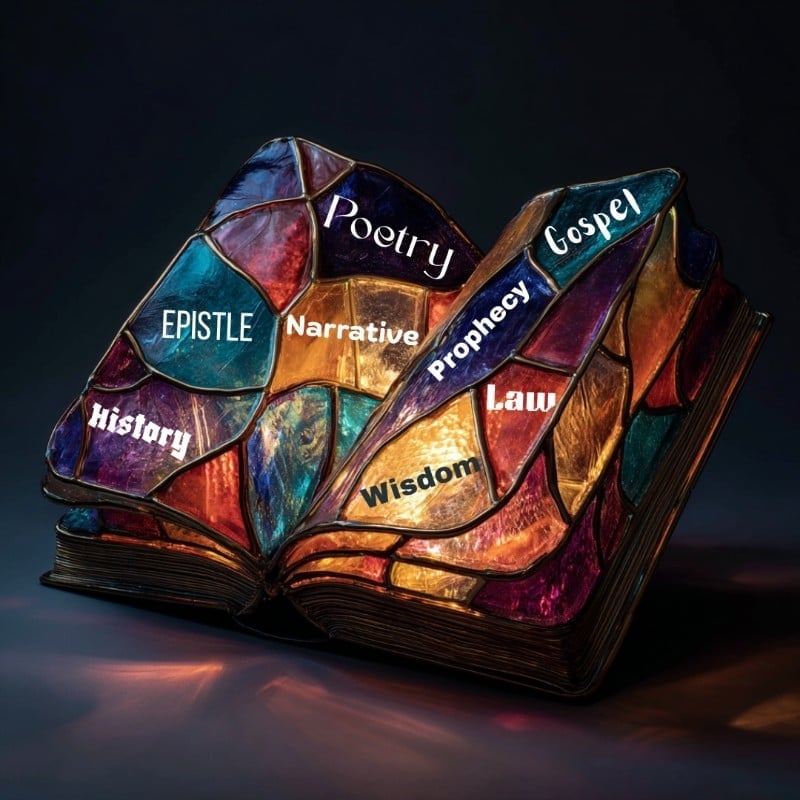
✅ Genre, including the distinctive conventions of poetry, narrative, epistle, wisdom, prophecy, and apocalyptic literature
✅ Diction, tone, and voice
✅ Figures of speech, including metaphor, simile, personification, hyperbole, irony, apostrophe, and rhetorical question
✅ Imagery and sensory language
✅ Parallelism, the foundational structure of Hebrew poetry, including synonymous, antithetic, synthetic, climactic, and chiastic forms
✅ Grammar as a meaning-making tool, including verb tense, voice, and mood
✅ Laws of composition, the structural strategies biblical authors use to organize their writing, including comparison, contrast, repetition, progression, pivotal point, and more
✅ Narrative elements, including setting, character, plot, conflict, and resolution
✅ Comparison forms, including parables, allegory, and typology
✅ Argument and rhetoric, including logos, pathos, and ethos
✅ Symbolism and motifs, traced across individual books and across the full biblical narrative
✅ Allusion and intertextuality, recognizing how biblical texts reference and reframe other biblical texts
✅ Theme, moving from topic to thematic statement and tracing how multiple literary elements converge to build meaning
✅ A three-lesson capstone on the book of Daniel, where students apply every analytical tool to one richly layered text
𝐖𝐡𝐚𝐭 𝐒𝐞𝐭𝐬 𝐓𝐡𝐢𝐬 𝐂𝐨𝐮𝐫𝐬𝐞 𝐀𝐩𝐚𝐫𝐭:
💎 Every lesson follows the I Do, We Do, You Do model. The teacher demonstrates the skill, guides practice together, and releases students to apply it independently. No guesswork. No busywork. No assumptions.
💎 All instruction happens live, with real scripture, in real time. No worksheets. No homework. Every minute of class teaches.
💎 Each session closes with a prayer response, a moment when the literary skill your student just learned becomes a tool for speaking to God.
💎 Every lesson opens with prayer and the recitation of Daniel 1:17, grounding the work in the conviction that literary understanding is a gift from God, given to those who ask for it.
𝐏𝐞𝐫𝐟𝐞𝐜𝐭 𝐅𝐨𝐫:
– Secondary students who want to read the Bible with depth, not just devotion
– Students who want rigorous literary training that most schools never offer
– Learners who love scripture and want to understand how it works as literature
– Brave beginners who have never studied literary analysis but are ready to start
– Families who want academic rigor grounded in faith
By the end of this course, your student will read the Bible differently. Not because she believes differently, but because she sees what was always there, waiting for a reader skilled enough to find it.
📖 𝕋ℍ𝔼 𝟚𝟘𝟚𝟞-𝟚𝟘𝟚𝟟 𝕊ℂℍ𝕆𝕆𝕃 𝕐𝔼𝔸ℝ ✏️
49 sessions • 45 minutes each
✅ The week of Sept 6, 2026: How You Approach Different Texts Differently
✅ The week of Sept 13, 2026: Who’s Telling This and Why
✅ The week of Sept 20, 2026: Audience and Purpose
✅ The week of Sept 27, 2026: How Word Choice Creates Meaning
✅ The week of Oct 4, 2026: How Diction Builds Tone and Reveals Voice
✅ The week of Oct 11, 2026: Metaphor and Simile
✅ The week of Oct 18, 2026: Personification and Anthropomorphism
✅ The week of Oct 25, 2026: Hyperbole and Understatement
✅ The week of Nov 1, 2026: Irony: Verbal, Situational, Dramatic
✅ The week of Nov 8, 2026: Apostrophe, Rhetorical Question, and Direct Address
✅ The week of Nov 15, 2026: Sensory Language
🌴 The week of Nov 22, 2026: Thanksgiving Break
✅ The week of Nov 29, 2026: How Imagery Clusters Create Atmosphere
✅ The week of Dec 6, 2026: How Imagery Carries Theological Weight
✅ The week of Dec 13, 2026: Synonymous, Antithetic, and Synthetic Parallelism
🌴 The week of Dec 20, 2026: Christmas Break
🌴 The week of Dec 27, 2026: Christmas Break
✅ The week of Jan 3, 2027: Climactic and Chiastic Parallelism
✅ The week of Jan 10, 2027: Verb Tense and Its Effect on Meaning
✅ The week of Jan 17, 2027: Voice and Mood: Commanded, Wished, or Stated
✅ The week of Jan 24, 2027: Comparison
✅ The week of Jan 31, 2027: Contrast
✅ The week of Feb 7, 2027: Repetition
✅ The week of Feb 14, 2027: Progression and Climax
✅ The week of Feb 21, 2027: Pivotal Point
✅ The week of Feb 28, 2027: Radiation and Interchange
✅ The week of Mar 7, 2027: General to Particular and Cause/Effect
✅ The week of Mar 14, 2027: Introduction, Summarization, and Interrogation
✅ The week of Mar 21, 2027: Setting: How Place and Time Shape Meaning
✅ The week of Mar 28, 2027: Character: Direct and Indirect Characterization
🌴 The week of Apr 4, 2027: Easter Break
✅ The week of Apr 11, 2027: Plot and Conflict: What Drives the Story
✅ The week of Apr 18, 2027: Resolution and Narrative Arc
✅ The week of Apr 25, 2027: Parables: How They Work and Why Jesus Used Them
✅ The week of May 2, 2027: Allegory: Sustained Comparison Across a Text
✅ The week of May 9, 2027: Types and Prefigures
✅ The week of May 16, 2027: Distinguishing Between Comparison Forms
✅ The week of May 23, 2027: Logos: Logical Structure and Evidence
✅ The week of May 30, 2027: Analysis: Breaking a Text Apart
✅ The week of Jun 6, 2027: Pathos and Ethos: Emotional and Credibility Appeals
✅ The week of Jun 13, 2027: What Makes Something a Symbol
✅ The week of Jun 20, 2027: Recurring Symbols in Scripture
✅ The week of Jun 27, 2027: How Motifs Build Across a Single Book
✅ The week of Jul 4, 2027: How Motifs Build Across the Full Biblical Narrative
✅ The week of Jul 11, 2027: Distinguishing Symbol, Motif, and Theme
✅ The week of Jul 18, 2027: How Biblical Texts Reference Other Biblical Texts
✅ The week of Jul 25, 2027: How to Identify and Trace a Theme
✅ The week of Aug 1, 2027: How Multiple Literary Elements Build Theme
✅ The week of Aug 8, 2027: Prophecy: Near, Far, and Twofold Fulfillment
✅ The week of Aug 15, 2027: How Genre Boundaries Blur and Overlap
✅ The week of Aug 22, 2027: Daniel’s Narrative, Rhetoric, and Character
✅ The week of Aug 29, 2027: Imagery, Symbolism, and Prophecy in Daniel’s Visions
✅ The week of Sept 5, 2027: Synthesis: Pulling Every Tool Together
Taught From a Christian Perspective
Our mission is to equip learners’ minds and shepherd their hearts. We want them to have saving faith in our Lord Jesus Christ and then develop a biblical worldview. This means they view their world, themselves, and God in a way that aligns with what the Bible teaches. This brings great peace and understanding to the believer because we serve a good, sovereign God. This course is taught with these goals in mind. In class, we may pray, read scripture, and discuss how to view the content from a Christian perspective.
We have adopted The Master’s Seminary Doctrinal Statement.
ENGLISH:
The most essential reason people must become competent readers is to read the word of God. This is how God communicates with His people, and literacy is critical for developing a biblical worldview. Competent readers can engage in the Word of God and other texts with much thinking and reflection. Readers should be able to decode, understand, remember, analyze, synthesize, evaluate, make inferences, make connections, and apply learning from reading to other subject areas and the rest of life. Readers grow in knowledge and wisdom and can let the Word of God renew their minds and transform their hearts, becoming thinkers who can engage the world for Christ.
When writing, we are turning ideas into words that communicate. Written communication should be functional, truthful, orderly, coherent, creative, and beautiful, all traits present in God’s written words in the Bible, which we want to emulate.
Communication skills are essential for believers. The communication skills taught in English will help learners communicate with others and to be confident public speakers. These skills are essential when sharing the gospel message. Our voices are tools that help us show Jesus to others as we witness to the world through what we say–and what we don’t say (see Colossians 4:6, James 1:19-20, Ephesians 4:29, and Proverbs 10:19). We serve a creative God who has given us all kinds of tools to help communicate His message.
LITERATURE:
Stories often serve as powerful vehicles for truth. For example, the prophet Nathan used a parable to reveal King David’s sin in 1 Samuel 12:1-4. Similarly, Jesus frequently used parables to teach profound spiritual lessons. Literature clearly offers timeless insights that reflect the complexities of life, guiding us toward His wisdom and understanding.
All truth is God’s truth. Even unbelievers use universal themes in their writing that clearly point to deeper truths about life and the human condition. For example, authors often use theme concepts related to justice, love, or integrity. These concepts reveal a glimpse of God’s truth– whether the author acknowledges it or not–because all truth originates from God (John 17:17).
Throughout English and literature courses, learners will read about individuals who made flawed decisions. As Romans 3:23 reminds us, “For all have sinned and fall short of the glory of God.” Literature provides a window into humanity’s fallen nature, allowing students to learn from the mistakes and successes of characters. By engaging with literature, students will gain timeless insights into the complexities of life, as reflected in Proverbs 2:6: “For the Lord gives wisdom; from His mouth come knowledge and understanding.”
✨ 🍋 ✨ Why Lemons-Aid? ✨ 🍋 ✨
A BIBLICAL WORLDVIEW: The Bible, infallible and inerrant, is the very written word of God, who has revealed Himself to man. The Bible is like the light we cast on all content areas in order to understand it, whether that be literature, physical science, history, or geometry. Students learn all content through a Biblical lens. Theology is important for understanding all subject areas. We carefully curate courses that capture learners’ imagination while pointing them to God through sound doctrine. THIS is most important!
RICH CONTENT / CORE KNOWLEDGE: While other schools and systems try to align their content to broad standards that are vague and open to wild interpretations, we focus our content on what students should know and be able to do so they see the world biblically and head into their adult lives filled with knowledge, wisdom, and mastery of skill such as computing and writing. For over a century, progressive education reform has been “anti-content,” which means they de-emphasize rich content and focus instructional time on things such as self-esteem and “skills” they hope will benefit a learner in the future. This is why American kids do so poorly in testing compared to nations with content-rich curricula. We want our learners to increase in knowledge and grow in wisdom, which our content-area experts foster while teaching.
EXPLICIT TEACHING: We understand the skills and concepts students need to learn and know how to teach them. Lemons-Aid’s materials are top-notch, organized, and clear for students and parents to understand. We are especially skilled at breaking down a complicated process into understandable parts. Further, explicit instruction is “a structured, systematic, and effective methodology for teaching academic skills. It is called explicit because it is an unambiguous and direct approach to teaching that includes both instructional design and delivery procedures. Explicit instruction is characterized by a series of supports or scaffolds, whereby students are guided through the learning process with clear statements about the purpose and rationale for learning the new skill, clear explanations and demonstrations of the instructional target, and supported practice with feedback until independent mastery has been achieved.”
- Explicit Instruction: Effective and Efficient Teaching by Anita L. Archer and Charles A. Hughes.
Anita Archer trained Mrs. Lemons in workshops, and it changed her teaching. Read a little more about the research behind explicit teaching here and here.
STUDENT ACCOUNTABILITY = ACHIEVEMENT: Students master skills with us and make gains. We have a high degree of accountability. Since we make promises here and parents are paying good money, we understand you trust us to work! Students have to work too, and let’s be honest: they’re kids and don’t always want to. We push it. We teach them how to stay engaged, we cold-call on kids, we tell them to use the chatbox, and we want them to use emojis! If they are resistant, we contact the student through the teacher tab first. If that doesn’t work, we call in the big guns–Mom and Dad. We want kids to learn. We don’t want them to pass through our classes without gaining skills and doing great learning.
DO HARD THINGS. Boost your confidence, master new skills, learn new concepts. This takes a commitment to do hard things. Like the standards we have for our teachers, we also expect our learners to do hard things, whether that means they stand firm in their convictions, learn geometry, write an essay, or give an oral presentation. You can do hard things!
HEALTHY RELATIONSHIPS: To balance our high expectations for their learning and behavior, we build relationships with them. We want them to know we care about and know them. We’ll ask about their play last weekend or the new trick they’re trying to master on the skateboard. We also want students to get to know each other and encourage community engagement.
DEPENDABLE: Multiple teachers are teaching this class, and we have an entire year of lessons planned and scheduled. Since we are a mission-driven organization, we protect our brand and the relationships with our families. We are accountable to our learners. When things come up for teachers, we work to get substitutes and do everything we can before canceling a class. We do not like canceling or changing, and we often teach classes at a loss to give others a chance to join. We have limits, of course, but we are not flippant or irresponsible about canceling! When things come up for students, since we have multiple sections, they can transfer from section to section. All our teachers teach the same content the same week, giving families even more flexibility!
TEACHER FEEDBACK: The back-and-forth work between a student and teacher significantly benefits a student if done well. We follow best practices in designing class time, assignments, and routines. According to Pennington Publishing, effective writing feedback (or grading) is:
- Specific, not general
- Immediate, not postponed
- Routine with a revision / feedback cycle
- Explanatory
- The right amount
- Targeted to the most critical issues
- Varied (written, audio, and video comments)
- Holding students accountable
WORKSHOP TIME: We use “workshop time” so students will work while the teacher answers questions, gets them started, and holds them accountable. In a writing class, the teacher “visits” learners on their Google Documents and watches and helps them write. The immediacy of the feedback/revision cycle with the instructor allows writers to improve rapidly. Additionally, once we started using this method in writing classes, we saw nearly a 100% completion rate in student essays!
GRAPHIC ORGANIZERS: Students need graphic organizers to help them see the structure and breakdown of a concept or process. For example, we use them to help learners understand how to write a paragraph or essay and to use the writing process. This is how they learn to develop coherent ideas. They don’t figure out how to do this magically; the graphic organizers and the intentional, explicit teaching help them learn the skills!
STUDENT MASTERY: Each class includes explicit, direct instruction with teacher modeling. Students are guided toward mastery of skills and understandings to grasp the concepts and become independent. Students are held to a high standard of academic work, including often ignored skills like the use of grammar and neatness in math.
STUDY THE BEAUTIFUL
We are surrounded by the mediocre, which is not good! We see this in expectations at some schools, the poor customer service at a store, and even architecture like in a gray, uninspiring complex of high-occupancy housing.
In contrast, we are surrounded by the beautiful, which is good! We see the beautiful in classic literature, music, and beautiful architecture like pictured here.
The mediocre demoralizes learners while the beautiful inspires.
At Lemons-Aid Learning, we study the beautiful: classic literature, artful sentence construction, art, poetry, maths, God’s hand in all of history, and God’s very creation. His creation glorifies Him, and in our study of all content areas, we learn about who God is.
We do not compromise. This means we don’t choose a graphic novel of Shakespeare’s A Midsummer Night’s Dream. We read the original play. We know how to make the complexity and beauty of classic study approachable and understandable to a modern audience. It’s more difficult, but worth the effort!
CUSTOMER SERVICE
We serve the Lord and we work hard for families. We work to give quick responses to questions, authentic and careful feedback, and to solve any conflict. As home educators ourselves, familiar with the joys and struggles of teaching our own children, we can relate! We are supporting families, equipping learners, and serving Christ. We are 100% devoted to Him and to you!
To read more about our teaching and learning methods, read our blogs, written by our teachers and staff.
The Lemons-Aid Team
Lemons-Aid teachers have a few things in common.
❤️ They love their students and value each of their unique strengths and personalities that make our classes special. Our classes can be described as fun, personal, academic, challenging, and supportive.
🤩 We work to keep learners engaged, so there is always a degree of student accountability for their attention and focus, whether that be through asking them direct questions or by using the chatbox.
💭 We know all kids can learn, but sometimes things are hard! To support students, we teach them how to develop effective thinking and learning habits that will bring them success in class and in life.
🌟 Building relationships with students so they know we care about them helps us balance the high expectations we have for them regarding their effort, work quality, and behavior. Our students are encouraged, cared for, and they achieve!
𝙆𝘼𝙍𝙀𝙉 𝙇𝙀𝙈𝙊𝙉𝙎: English Language Arts
#High-Energy #Skilled #Experienced #Relational #Fun #Faithful
Karen is the Founder of Lemons-Aid. She has a bachelor’s degree in English, a minor in Education, and a master’s degree in Education Administration from Liberty University. With a teaching certificate and a principal’s license in both Washington and Colorado, she has many years of experience teaching English Language Arts and History / Social Studies at the middle school and high school levels. Additionally, she is TESOL and TEFL certified and enjoys teaching English Language Learners from all over the world. She has worked in private and public schools at every level and is currently an affiliate faculty member at Colorado Christian University, supervising teacher candidates in their undergraduate and graduate teacher education programs. She is a teacher of teachers. A homeschool mom herself, she admits that teaching other people’s kids is easier than teaching her own teenage boys! She lives in the Denver, Colorado area where she cheers on the Broncos, Avs, and the Rockies, but her favorite athletes are her own kids who play hockey and baseball!
𝑱𝑬𝑵𝑵 𝑹𝑰𝑨𝑳𝑬: English Language Arts
#Experienced #Knowledgeable #Empowering #Patient #Rises Above the Ordinary.
As a certified English teacher, Jenn has taught in some capacity over the course of the past twenty-five years. She has taught middle school and high school English classes in both private and public school settings, tutored international ESL students online, developed and taught literature and public speaking classes for a local homeschool co-op, and homeschooled her own two children. Jenn has a bachelor’s degree in English Education. A strong believer in lifelong learning, Jenn has also taken several graduate-level courses related to teaching. Jenn enjoys spending time with her husband, Mark, and their two teenagers. She enjoys taking day trips close to where they live in upstate New York. In her spare time, Jenn enjoys singing and performing in plays. Additionally, she enjoys curling up on the sofa to read a good book. More than likely, one of her four cats will be curled up at her feet.
𝙈𝙍𝙎. 𝘼𝙇𝙄:
Elementary
#Engaging #Fun #Patient #Kind #Encouraging
Ali has a Bachelor’s Degree in Early Childhood Education and has worked with children over the last 11 years. She taught for 6 years in public school, 2 years in Kindergarten and 4 years in First Grade. She has worked as a reading tutor and ESL teacher online for the last 4 years; she has also tutored children in-person in reading, writing, and STEM. Ali believes that every child is a natural learner; she believes that an educator’s goal is to engage each child in the way that they learn best! She is passionate about creating a safe and FUN environment that teaches the whole child. Each time she enters a classroom, whether it is in-person or online, you can find her singing, playing games, and making learning fun. Ali lives in Missouri, near St. Louis with her husband, son, and fur-child (an 80 lb. German Shepherd who doesn’t know how big he is). In her free time she loves reading, writing, crafts, hiking, working out, and spending time with my family.
𝙆𝙄𝙈𝘽𝙀𝙍𝙇𝙔 𝙋𝘼𝙍𝙄𝙉𝙄𝙎𝙄: English
#Energetic #Kind #Encouraging #Authentic #Enthusiastic #Guide
Kim loves life, loves people, and loves learning! She views each student as a team member with his or her own unique talents, skills and life experience to bring to the group. She loves helping students expand their knowledge and sharpen their skills to reach their greatest potential. Kim has a Bachelor’s degree from Cairn University in secondary Education with certification in English (NY and PA) and endorsement in music. Her classroom experience has focused on English, PE and Bible education, but she has tutored in a variety of areas including ESL, special ed, math, history, science and music (piano and voice). She lives in northeast PA with her wonderful family. She has homeschooled all of her seven children. The youngest five are still in school and ensure that every day is an adventure. Kim also coaches intramural and competitive sports throughout the year. She loves music, sports, reading and taking long walks up her dirt road admiring wildflowers, listening to birds and reflecting on what she is learning in life!
This class is not offered on Outschool
Request a New Section
Want to see this class offered at another time? Send a request, and we’ll see what we can do!
ENGLISH:
The most essential reason people must become competent readers is to read the word of God. This is how God communicates with His people, and literacy is critical for developing a biblical worldview. Competent readers can engage in the Word of God and other texts with much thinking and reflection. Readers should be able to decode, understand, remember, analyze, synthesize, evaluate, make inferences, make connections, and apply learning from reading to other subject areas and the rest of life. Readers grow in knowledge and wisdom and can let the Word of God renew their minds and transform their hearts, becoming thinkers who can engage the world for Christ.
When writing, we are turning ideas into words that communicate. Written communication should be functional, truthful, orderly, coherent, creative, and beautiful, all traits present in God’s written words in the Bible, which we want to emulate.
Communication skills are essential for believers. The communication skills taught in English will help learners communicate with others and to be confident public speakers. These skills are essential when sharing the gospel message. Our voices are tools that help us show Jesus to others as we witness to the world through what we say–and what we don’t say (see Colossians 4:6, James 1:19-20, Ephesians 4:29, and Proverbs 10:19). We serve a creative God who has given us all kinds of tools to help communicate His message.
LITERATURE:
Stories often serve as powerful vehicles for truth. For example, the prophet Nathan used a parable to reveal King David’s sin in 1 Samuel 12:1-4. Similarly, Jesus frequently used parables to teach profound spiritual lessons. Literature clearly offers timeless insights that reflect the complexities of life, guiding us toward His wisdom and understanding.
All truth is God’s truth. Even unbelievers use universal themes in their writing that clearly point to deeper truths about life and the human condition. For example, authors often use theme concepts related to justice, love, or integrity. These concepts reveal a glimpse of God’s truth– whether the author acknowledges it or not–because all truth originates from God (John 17:17).
Throughout English and literature courses, learners will read about individuals who made flawed decisions. As Romans 3:23 reminds us, “For all have sinned and fall short of the glory of God.” Literature provides a window into humanity’s fallen nature, allowing students to learn from the mistakes and successes of characters. By engaging with literature, students will gain timeless insights into the complexities of life, as reflected in Proverbs 2:6: “For the Lord gives wisdom; from His mouth come knowledge and understanding.”
Reviews
There are no reviews yet.